Compassionate Care for Every Family
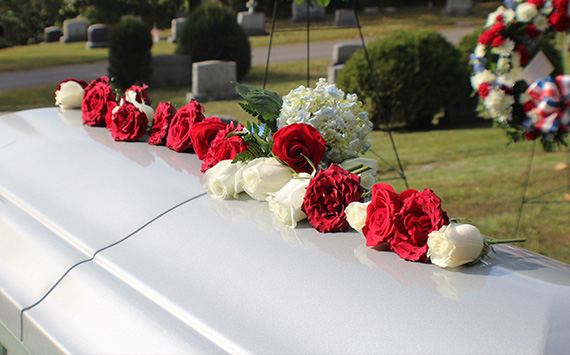
Every Family Deserves a Meaningful Farewell

At Grimes Funeral Chapels, we have served the Kerrville community and the Texas Hill Country for generations. We understand that no two families are alike, and we believe every farewell should be as unique as the life it honors.

Whether you are planning a traditional service, considering cremation, or honoring a veteran's sacrifice, our experienced staff is here to guide you every step of the way — with compassion, professionalism, and genuine care.

We invite you to explore the full range of services we offer below, or call us any time at 830.257.4544. We are available 24 hours a day, 7 days a week.

  • Traditional funeral services
  • Cremation services & arrangements
  • Military honors & veteran benefits
  • Pre-planning & pre-funding
  • Grief support resources

Download Your Guide — Arranging Your First Funeral — Here?

Arranging a funeral for the first time can feel overwhelming. We are here to make it as simple and as peaceful as possible. Fill out the form below and one of our experienced family service directors will reach out to answer your questions, walk you through your options, and help you plan a service that honors your loved one beautifully.

Download Your Guide — Arranging Your First Funeral — Here?

We will guide you through every step — with care and no obligation.

Fields marked * required

Planning a funeral for the first time brings up many questions. Here are the ones families ask us most often — focused on the choices and decisions that shape the actual service.

This is often the first and most significant decision. Traditional burial involves interment in a cemetery, with a casket and grave marker. Cremation reduces the body to ashes, which can then be buried, placed in an urn, kept at home, or scattered in a meaningful location. Neither choice is more respectful than the other — both allow for a full, meaningful service. If your loved one left specific wishes, honor them. If not, consider what feels most fitting for their personality, beliefs, and your family's needs. Cost is also a factor: cremation is generally less expensive than traditional burial.
A viewing (or visitation) is an informal gathering where friends and family come to pay their respects, typically with the body present in the casket. A funeral service is a more structured ceremony, also with the body present, often led by clergy or a celebrant. A memorial service is held without the body present — common after cremation or when burial has already taken place. You can have any combination of these: a visitation the evening before, followed by a funeral the next day, or a simple memorial a week later. There is no single right format.
No. Many families choose to hold a memorial service without the body present, particularly when cremation has taken place or when family members are traveling from a distance. A framed photo, a display of flowers, or a meaningful object can serve as a focal point instead. That said, many grief counselors note that viewing the body can be an important part of accepting the reality of the loss — so if it is an option, it is worth considering.
This is entirely a personal and family decision. An open casket allows mourners to say a final, personal goodbye and can bring comfort and closure. A closed casket may be preferred for religious or cultural reasons, if the family feels it better preserves dignity, or if the circumstances of the death make an open casket impractical. Our staff will help you make the choice that feels right — and will prepare your loved one with the utmost care either way.
Services can be held anywhere that is meaningful to the family. The most common locations are the funeral home chapel, a church or place of worship, a graveside at the cemetery, or an outdoor location such as a park or family property. Some families choose a location that reflects the personality of their loved one — a community hall, a ranch, a favorite gathering place. We can help coordinate the service at any location you choose.
Services are most commonly led by a member of the clergy, a funeral celebrant, or a family friend. The content of the service is entirely up to you — there is no required script. Most services include an opening, a eulogy or life tribute, readings or scripture, music, and a closing. Family members are warmly encouraged to speak, sing, read a poem, or share a memory. We can help you create a program and coordinate every element so nothing is left to chance on the day.
Personalization is one of the most meaningful things you can do. Consider music they loved, readings that reflect their faith or philosophy, a photo display or video tribute, flowers in their favorite colors, or items that represent their hobbies and passions — a fishing rod, a set of golf clubs, a quilt they made. The clothing and jewelry they are dressed in, the style of the casket or urn, the memorial folders that guests take home — all of these can be tailored to tell their story. We will help you think through every detail.
Any music can be appropriate if it was meaningful to your loved one or to the family. Traditional hymns and classical music are common, but many families choose country, jazz, rock, or even a specific song that holds personal meaning. Music can be performed live by a vocalist, pianist, or string quartet, or played from a recording. We can help arrange live musicians if desired. The most important thing is that the music feels true to the person being honored.
A graveside service takes place at the cemetery at the time of interment. It can be the only service held, or it can follow a funeral service at the chapel or church. Graveside services are typically shorter and more intimate, with a brief ceremony conducted by clergy or a celebrant, the lowering of the casket, and often the presentation of a flag for veterans. Family and close friends are gathered around the gravesite. It can be a deeply personal and moving conclusion to the farewell.
Cremated remains can be kept in an urn at home, buried in a cemetery plot or cremation garden, placed in a columbarium niche, or scattered in a location that was meaningful to your loved one — a ranch, a river, the ocean. Some families divide the remains so that different family members can each keep a portion. There are also memorial keepsakes such as jewelry or glass art that can incorporate a small amount of the remains. We will walk you through every option available.

Every family is different. Every farewell is different. We are here to help you make choices that feel right — not to tell you what to do.